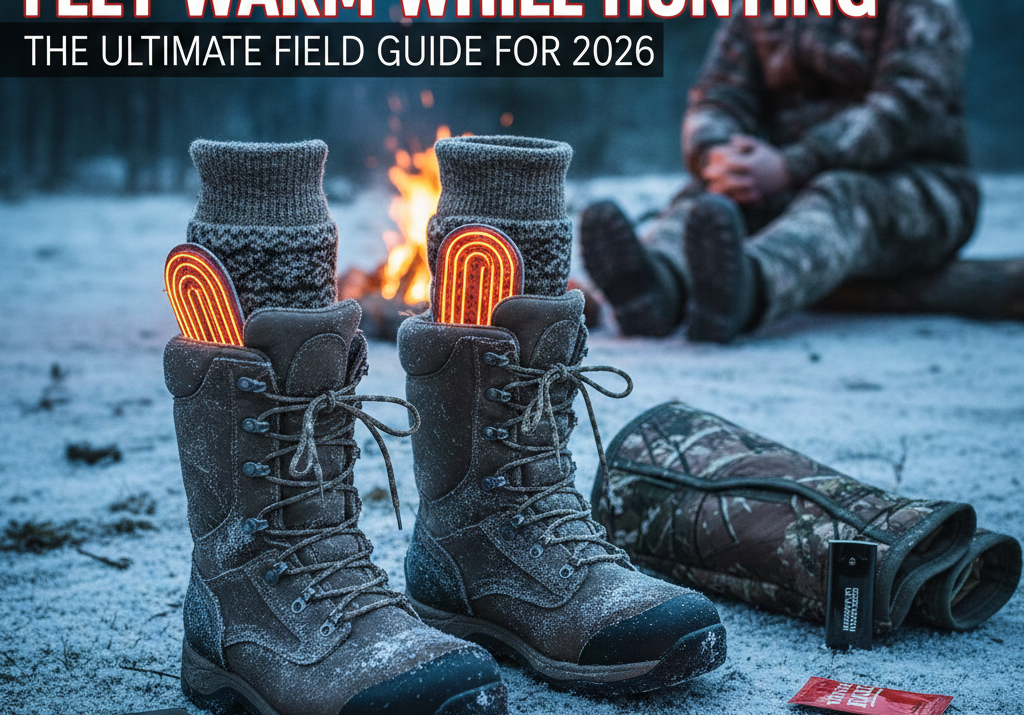
There is a specific kind of misery reserved for hunters with cold feet. I remember a late-season whitetail sit in Saskatchewan back in 2022. The mercury had dipped to -20°F, and despite my high-end parka keeping my core toasty, my toes felt like blocks of ice. I spent the last hour of legal light focused not on the treeline, but on the excruciating pain in my boots. When a decent buck finally stepped out, I was shivering so violently from the ground up that I couldn’t steady my crosshairs. He walked. I didn’t.
That day taught me a lesson I’ve carried to every hunt since: If your feet are cold, your hunt is over.
Whether you are sitting in a metal tree stand in November or glassing for elk in knee-deep snow, managing extremity temperature is a skill as vital as marksmanship. It’s not just about comfort; it’s about focus, endurance, and safety.
In this guide, I’m going deeply into the tactics I’ve learned over decades in the field. We aren’t just talking about buying thicker socks. We are talking about the physics of heat loss, circulation management, and the 18 specific protocols I use to ensure I never leave the stand early because of frozen toes again.
Here is exactly how to keep your feet warm while hunting, from the prep room to the field.
The Science of Cold: Why Your Feet Freeze First
Before we get to the gear, you need to understand the enemy. Your body is a biological furnace designed to protect the core (heart, lungs, brain). When you sit still in a deer stand, your heart rate drops. As the ambient temperature lowers, your body undergoes vasoconstriction.
Essentially, your body clamps down on the blood vessels in your hands and feet, restricting blood flow to preserve warm blood for your vital organs. This is a survival mechanism, but for a hunter, it’s a disaster.
To beat cold feet, you have to fight three forces:
-
Conduction: Heat transfer through direct contact (your boots touching cold metal or ice).
-
Convection: Cold air moving across your boots stripping away heat.
-
Evaporation: Sweat cooling your skin (the biggest killer).
The following 18 methods address these three forces directly.
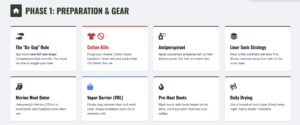
Phase 1: Preparation & Gear Strategy
1. The “Air Gap” Rule (Size Up Your Boots)
This is the number one mistake I see rookies make. They buy expensive, 2000g insulated boots in their street shoe size. When you add thick wool socks, your foot is compressed.
Compression kills warmth. It cuts off circulation (worsening vasoconstriction) and collapses the air pockets in the insulation. Insulation doesn’t generate heat; it traps dead air. If you squeeze the air out, you have zero insulation.
-
The Fix: I always buy my cold-weather hunting boots one full size larger than my street shoes. You should be able to wiggle your toes freely even with your thickest socks on.
2. Ditch the Cotton (The “Cotton Kills” Mandate)
You have heard it before, but I will say it again: Cotton has no place in the woods. When cotton gets wet (from sweat), it loses all insulating value and sucks heat away from the body 25 times faster than air.
-
The Fix: purge your drawer. If it says cotton, leave it at home. Rely on Merino wool or high-end synthetics.
3. Apply Antiperspirant to Your Feet
This is an old guide trick I picked up in the Pacific Northwest. The primary reason feet get cold is that they sweat while you are hiking to your stand. Once you stop moving, that sweat cools and freezes.
-
The Fix: Spray a high-quality antiperspirant (unscented, obviously) on your feet before you put your socks on. This keeps your feet dry from the start. Dry feet are warm feet.
4. The Liner Sock Strategy
Never wear just one pair of socks in deep cold. I use a “system” approach.
-
The Fix: Start with a thin, synthetic or silk liner sock. This layer’s sole job is to wick moisture away from the skin and transfer it to the outer sock. It also reduces friction, which prevents blisters on long hikes.
5. High-Loft Merino Wool Outer Socks
Over your liner, wear the heaviest Merino wool sock you can find. Merino is magical because it is exothermic—it actually generates a tiny amount of heat when it absorbs moisture, and it insulates even when wet.
-
The Fix: Look for “heavyweight” or “expedition weight” designations. I prefer a blend that is at least 70% Merino wool.
6. The Vapor Barrier Liner (VBL) Trick
This is an extreme measure for extreme cold (think sub-zero sits), but it works. A Vapor Barrier Liner is a waterproof layer worn between your liner sock and your insulation layers.
-
The Fix: You can buy dedicated VBL socks, or in a pinch, use a plastic bread bag.
-
Layering: Skin -> Thin Liner -> Plastic Bag -> Thick Wool Sock -> Boot.
-
Why it works: It stops your sweat from getting into the thick wool sock and the boot insulation. Your inner liner gets wet, but your insulation stays bone dry and retains 100% efficiency.
-
7. Pre-Heat Your Boots
Your boots are likely sitting in a cold truck or a garage before you put them on. Putting a warm foot into a freezing cold boot immediately sucks the heat out of your skin to warm the boot materials.
-
The Fix: I put my boots on the floorboard of the truck with the heater blasting into them on the drive to the hunting property. Starting with boots at 70°F gives you a massive head start.
8. Use a Boot Dryer Daily
If you hunt multiple days in a row, a boot dryer is mandatory. Even if you don’t feel it, your boots absorb moisture daily. Damp boots on day two are a recipe for frostbite.
-
The Fix: Put your boots on a forced-air dryer (like a Peet dryer) immediately when you get back to camp. Ensure they are bone dry for the next morning.
Phase 2: In The Field Tactics

9. Loosen Your Laces Once You Sit
We tie our boots tight for ankle support while hiking. But once you climb that tree stand or settle into the blind, that tightness restricts blood flow across the top of your foot.
-
The Fix: As soon as I am settled, I untie my boots and loosen the laces significantly. This allows maximum blood flow to reach the toes. Just remember to retie them before you climb down!
10. The Carpet or Foam Pad (Blocking Conduction)
Metal tree stand grates are heat sinks. They will pull heat out of your rubber boots effectively. The ground is just as bad.
-
The Fix: Carry a small square of old carpet, a cut piece of sleeping pad foam, or a dedicated hunting stand pad. Place it on the metal grate or the frozen ground. Placing your feet on this barrier stops conductive heat loss instantly.
11. Boot Blankets (Over-Boots)
If you suffer from poor circulation, Boot Blankets (like those made by Arctic Shield) are game changers. These are insulated fabric covers that slip over your muddy boots.
-
The Fix: Pack them in (they crush down small). Once you are on the stand, slip them over your boots. They create a dead-air oven around your foot. I have sat in -10°F weather for 6 hours using these and standard boots.
12. Heated Insoles
Technology has come a long way. Heated insoles replace your factory insoles and provide heat from underneath.
-
The Fix: Look for remote-controlled versions so you don’t have to take your boots off to adjust the temp.
-
Pro Tip: Don’t run them on “High” constantly. Run them on “Low” or pulse them to prevent sweating. If you sweat because the heater is too hot, you will freeze when the battery dies.
-
13. App-Controlled Heated Socks
If I had to choose between heated insoles and heated socks, I choose socks in 2026. Heated socks wrap the heating element around the toes and forefoot, which is where you need it most.
-
The Fix: Modern pairs use Bluetooth. I can adjust the temperature of my toes from my phone without moving a muscle. This minimizes movement and scent dispersion.
14. Chemical Toe Warmers (Proper Placement)
Those little disposable packets are life-savers, but 90% of hunters use them wrong. They put them under their toes. This is uncomfortable and restricts blood flow.
-
The Fix: Adhere the chemical warmer to the TOP of your sock, right over the toes. There is more room there, and the veins that supply blood to the toes run across the top of the foot. You heat the blood before it gets to the extremity.
15. The Mid-Hunt Sock Change
If you have a long walk to your stand (over a mile), your feet will be sweaty no matter what.
-
The Fix: Carry a fresh, dry pair of heavy wool socks in your pack. When you get to the stand, take 3 minutes to strip off your damp socks and put on the dry ones. It’s a hassle, but it resets your “warmth clock” to zero.
16. Gaiters
Gaiters aren’t just for keeping snow out of your boots; they are an extra layer of insulation for your ankles and shins.
-
The Fix: By keeping your lower legs warm and dry, you keep the blood flowing down to your feet warmer. It prevents heat from escaping the top of the boot shaft.
17. Dietary Thermogenesis (Fuel the Furnace)
You cannot heat a house with no fuel. If you are hungry, your body conserves energy and stops heating your extremities.
-
The Fix: Eat high-fat, high-protein foods. Digestion creates internal heat (thermogenesis). I keep pemmican, beef jerky, or nuts in my pocket. A steady intake of calories keeps the furnace burning. Hydration is also key—dehydration thickens blood, making it harder to pump to your toes.
18. Isometric Toe Exercises
When the chill starts to creep in, you need to generate mechanical heat.
-
The Fix: Curl your toes tightly for 5 seconds, then release. Flex your calves. Do this repeatedly. It forces blood into the area. Do not wave your legs around (which spooks deer); keep the movement inside the boot.
Gear Comparison: Wool vs. Synthetic vs. Cotton
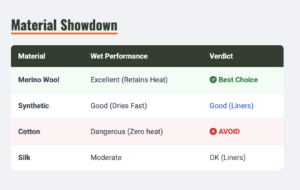
Choosing the right material is the foundation of warmth. Here is a quick breakdown of how they stack up in the field.
| Material | Moisture Management | Insulation When Wet | Durability | Odor Control | Verdict |
| Merino Wool | Excellent (Wicks well) | Excellent (Retains heat) | Moderate | High (Antimicrobial) | Best Choice |
| Synthetic | High (Dries fast) | Good | High | Low (Stinks quickly) | Good for Liners |
| Cotton | Poor (Absorbs/Holds) | None (Dangerous) | Low | Low | Avoid |
| Silk | Good | Moderate | Low | Moderate | OK for Liners |
Insulation Guide: How Much Grams Do You Need?
I often get asked, “How many grams of Thinsulate do I need?” Here is the general rule of thumb I follow based on activity level and temperature.
-
Uninsulated to 200g: Early season, high activity (upland bird hunting, elk stalking).
-
400g – 800g: Mid-to-late season. Moderate activity with some sitting. Good for temps down to freezing (32°F).
-
1000g – 1200g: Late season stationary hunting. Tree stands or blinds. Temps 10°F to 32°F.
-
2000g / Pac Boots: Extreme cold. Sub-zero stationary sits.
Frequently Asked Questions
Q: Why do my feet get cold even in 2000g boots?
A: It is almost always a circulation or sweat issue. If the boots are too tight (because of thick socks), you cut off blood flow. If your feet sweated on the walk in, that moisture is now cooling you down. Try a lighter sock or a larger boot, and use antiperspirant.
Q: Are electric heated socks worth the money?
A: In my opinion, yes. The technology in 2025 and 2026 has become reliable and thin. The ability to turn heat on only when you get cold (saving battery) is invaluable for all-day sits.
Q: Can I use hand warmers in my boots?
A: You can, but they are often too bulky and can cause discomfort. Toe warmers are designed to be flatter and have an adhesive to stick to your sock so they don’t slide around.
Q: Does drinking alcohol help keep you warm?
A: Absolutely not. Alcohol is a vasodilator—it rushes blood to your skin, making you feel warm temporarily, but it actually accelerates heat loss from your core. It is dangerous in survival situations. Stick to hot tea or coffee.
Conclusion
Cold feet don’t just make you miserable; they break your mental focus. You can’t sit still when you are in pain, and you can’t make an ethical shot when you are shivering.
By implementing a system—starting with the right-sized boots, managing moisture with liners and antiperspirant, and utilizing tools like boot blankets and chemical warmers—you can outlast the elements.
Next time the temperature drops, don’t head for the truck. Loosen your laces, turn on your heated socks, and wait for that trophy buck. He’s counting on the cold to drive you away. Don’t let him win.